LIS companies generally do not obtain CLIA certification on behalf of their laboratory clients. CLIA certification applies to the laboratory performing testing, while the LIS is a technology system that can help the laboratory organize and control its workflow.
In the U.S., the laboratory is responsible for applying for the appropriate CLIA certificate. CMS states that laboratories generally submit Form CMS-116 to their State Agency, receive their CLIA identification number and fee notification, and then receive their certificate after the required process is completed. The certificate type depends on the complexity of testing performed.
Where an LIS becomes valuable is supporting the laboratory's operational and documentation processes. For example, an LIS can help with:
● Patient and specimen identification
● Barcode-based sample tracking
● Test ordering and result management
● Automated result transfer from analyzers
● Report generation and traceability
● Maintaining electronic records
● Workflow standardization
● Audit trails and access control
● Integration with laboratory instruments
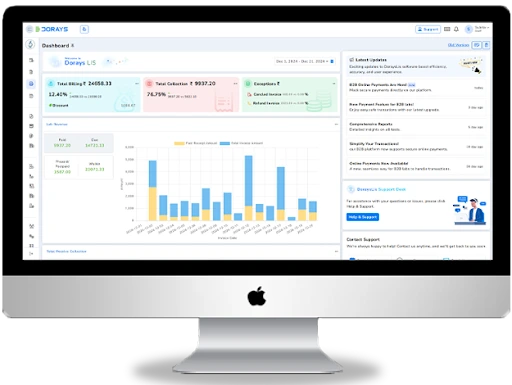
For example, DoraysLIS provides LIMS capabilities including lab order management, TAT monitoring, custom reporting and laboratory equipment interfacing. Its machine-interfacing workflow can transfer analyzer results into the LIS without manual data entry, helping reduce transcription-related work.
However, it's important to distinguish software support from regulatory certification. Having an LIS does not automatically make a laboratory CLIA-certified or guarantee compliance. The laboratory remains responsible for meeting applicable CLIA requirements, including requirements related to personnel, testing procedures, quality control, proficiency testing and other laboratory operations. CMS also provides separate guidance covering areas such as IQCP, personnel competency, calibration and verification.
So, the practical relationship is:
CLIA → certifies/regulates the laboratory
LIS → helps the laboratory manage, document and control its testing workflow
For a laboratory preparing for CLIA requirements, the best approach is to first understand its applicable certificate type and regulatory requirements, then configure the LIS around those laboratory processes rather than treating the LIS itself as the certification.
Reference: CMS — Clinical Laboratory Improvement Amendments (CLIA)
LIS example: DoraysLIS — LIMS Software